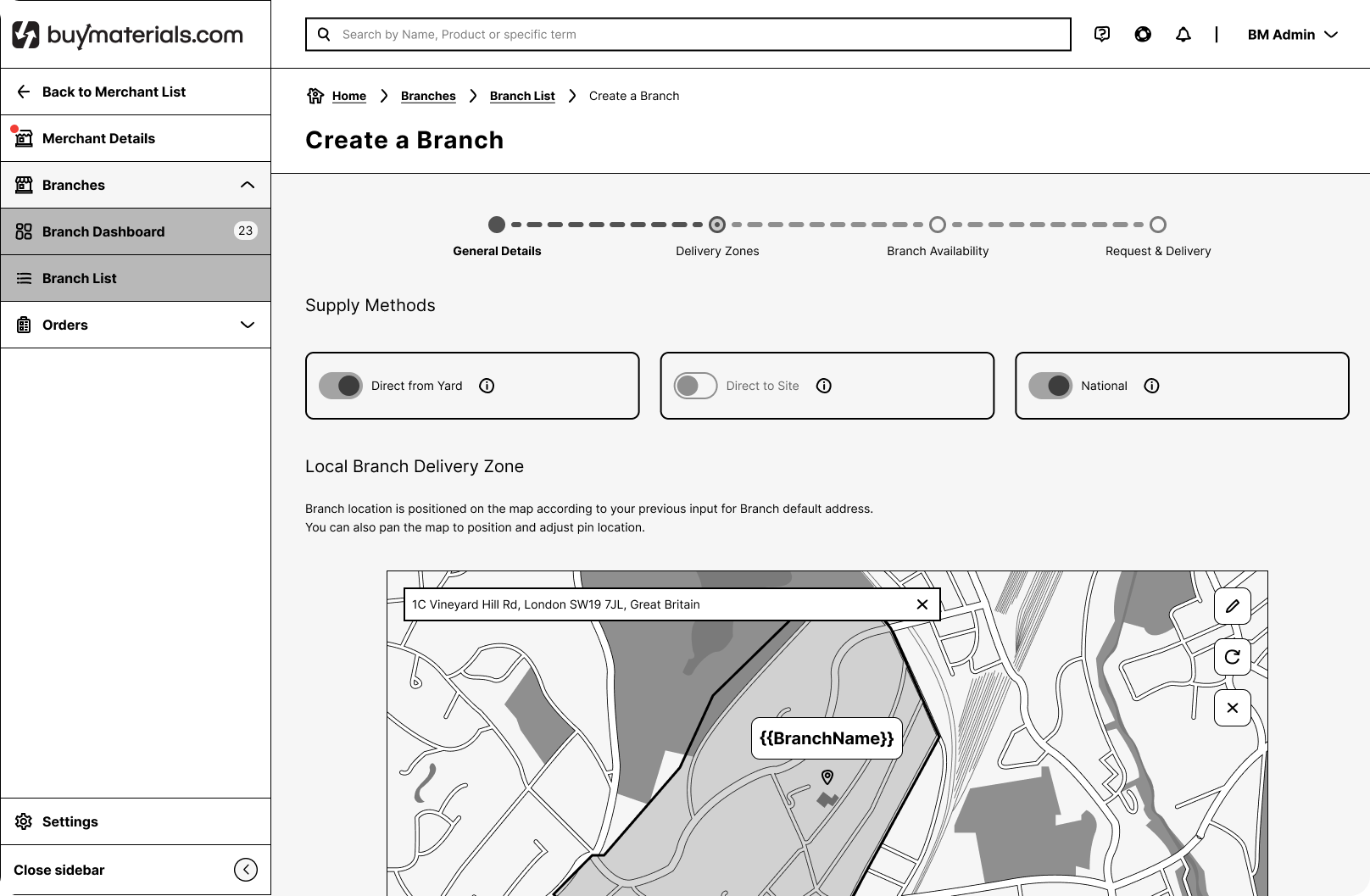
Taking B2B procurement features from idea to validated design in days
Role evolution
Expanding from UX execution into full product design responsibility
Initially focused on UX workflows and interaction design, the role expanded into full product design ownership.
Beyond defining user flows, I influenced UI direction, component behavior, and scalable visual consistency. Over time, design became a structured product discipline contributing to roadmap clarity and implementation quality.
Impact snapshot
From UX execution to Product Design ownership
Expanded the role from workflow design into full product design responsibility, influencing interaction logic, UI direction, and system-level consistency.
Reduced delivery lag
Structured discovery and validation cycles shortened feedback loops and minimized rework.
Accelerated feature validation
The Wireframe Kit Library enabled faster exploration and earlier decision-making before development commitment.
Improved cross-team alignment
Clearer UX documentation and shared patterns strengthened collaboration across design, engineering, and stakeholders.
Cross-platform consistency
Designed responsive web and mobile-native experiences with consistent interaction and visual behavior.
Established scalable foundations
Defined reusable UX and UI patterns that support long-term platform growth and maintainability.
Context and challenge
Delivery lag and missing design foundations in a growing B2B platform
The project faced accumulated backlog, unclear design direction, and a lack of shared UX and UI foundations.
Feature discussions often moved directly into development without early validation, leading to rework and misalignment between internal teams and client stakeholders.
The core challenge was establishing structure before scaling complexity.
Process and discovery transformation
Introducing structure before speed
To stabilize delivery, I formalized early discovery and validation stages prior to development commitment.
This included:
Internal alignment reviews before client presentations
Iterative wireframe exploration
Clear separation between concept validation and implementation
Structured UX documentation for engineering handoff
This shift reduced ambiguity and improved confidence in feature decisions.
Wireframe Kit Library
Accelerating validation while standardizing interaction patterns
Introduced a reusable Wireframe Kit Library to support rapid exploration and consistent UX decisions.
The library enabled:
Faster iteration on new features
Reuse of validated interaction patterns
Clearer feedback cycles
Reduced downstream UI and engineering rework
Wireframes became a strategic validation tool rather than a one-off deliverable.
End-to-end design ownership
From early flows to final UI and system states
Owned the full design lifecycle across the platform.
This included:
Early concept validation
Detailed wireframes
All screen states and edge cases
Responsive web experiences
Mobile-native application flows
Design decisions ensured functional clarity while maintaining visual consistency across platforms.
UI direction and system thinking
Designing for clarity, consistency, and long-term scalability
Influenced UI patterns and layout systems that supported complex procurement workflows without increasing cognitive load.
Focused on:
Hierarchical clarity
Component consistency
Reusable visual structures
Long-term maintainability
UI team decisions were aligned with scalability goals rather than short-term customization.
Design as a stabilizing force
From reactive execution to structured product design
By introducing structure, validation cycles, and reusable design foundations, BuyMaterials shifted from reactive delivery toward predictable, scalable product development.
Design evolved into a product design function influencing workflow clarity, UI direction, and long-term platform sustainability.